
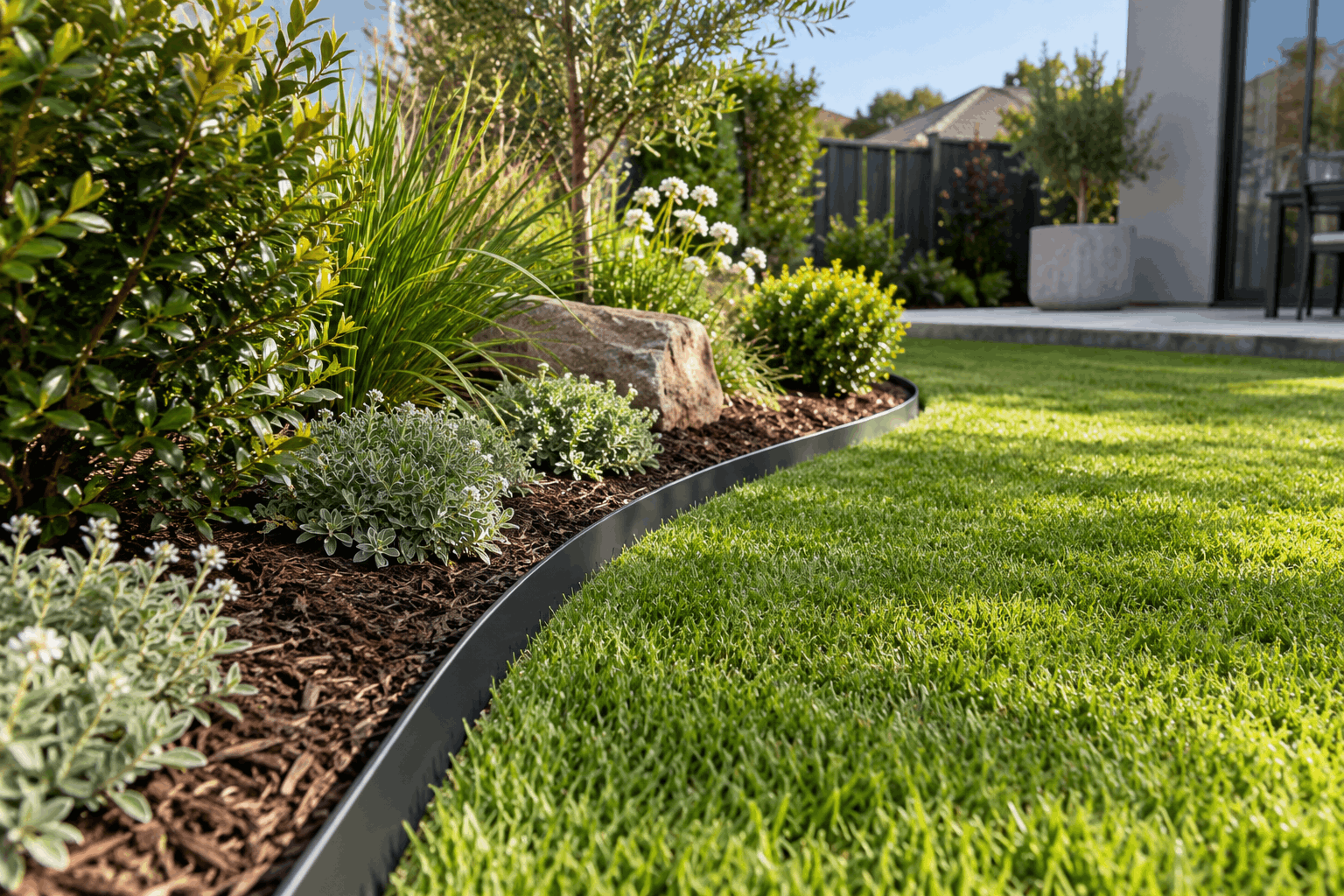
A garden can look carefully planned, yet untidy borders can make the whole space feel unfinished. Choosing an edging material also affects mowing, soil movement, drainage, maintenance and how the garden connects with paths and outdoor areas.
Common problems include:
- Grass creeping into garden beds.
- Mulch washing onto paths after heavy rain.
- Edging shifting because it was installed into loose ground.
- A material that clashes with the home or outdoor finishes.
With more than 10 years of experience, Bayside Landscaping helps Melbourne homeowners plan outdoor spaces from design consultation through to construction. This guide explains how to choose the right material for garden edging in Melbourne.
Focus: Choosing edging that suits Melbourne gardens, planting and outdoor use.
Key Considerations: Material strength, drainage, soil movement, garden style and maintenance.
Practical Approach: Garden edging in Melbourne can use steel, timber, brick, concrete or a simple cut edge, depending on the site.
Professional Insight: Bayside Landscaping considers the relationship between edging, paths, turf, irrigation and construction levels before installation.
Outcome: A border that looks appropriate and performs reliably in everyday garden use.
1. Which Garden Edging Material Suits Your Garden Best?
The right material depends on what the edge needs to do. Steel and aluminium suit crisp curves and contemporary gardens, timber creates a warmer border, while brick, pavers and concrete provide a more substantial finish. A simple spade-cut edge can work where flexibility and a natural appearance matter.
|
Material |
Suits |
Key consideration |
|
Steel |
Modern gardens, curves, clean lines |
Profile, fixing and ground stability |
|
Aluminium |
Curves and lighter borders |
Check product strength for the application |
|
Timber |
Natural gardens, raised beds |
Soil contact and long-term durability |
|
Brick or pavers |
Traditional and formal gardens |
Requires a stable base |
|
Concrete |
Durable mowing strips |
Installation and cracking considerations |
|
Spade-cut edge |
Natural, informal beds |
Requires periodic reshaping |
Melbourne suppliers and local technical standards show that steel, timber and masonry edging are all established options, with the installation detail varying according to the application.
Practical tip: Choose the material after deciding the job of the border. A decorative edge needs a different specification from an edge that separates turf beside a frequently used path.
Choose The Right Garden Edging For Your Property
2. How Should You Match Edging Style With Your Home?
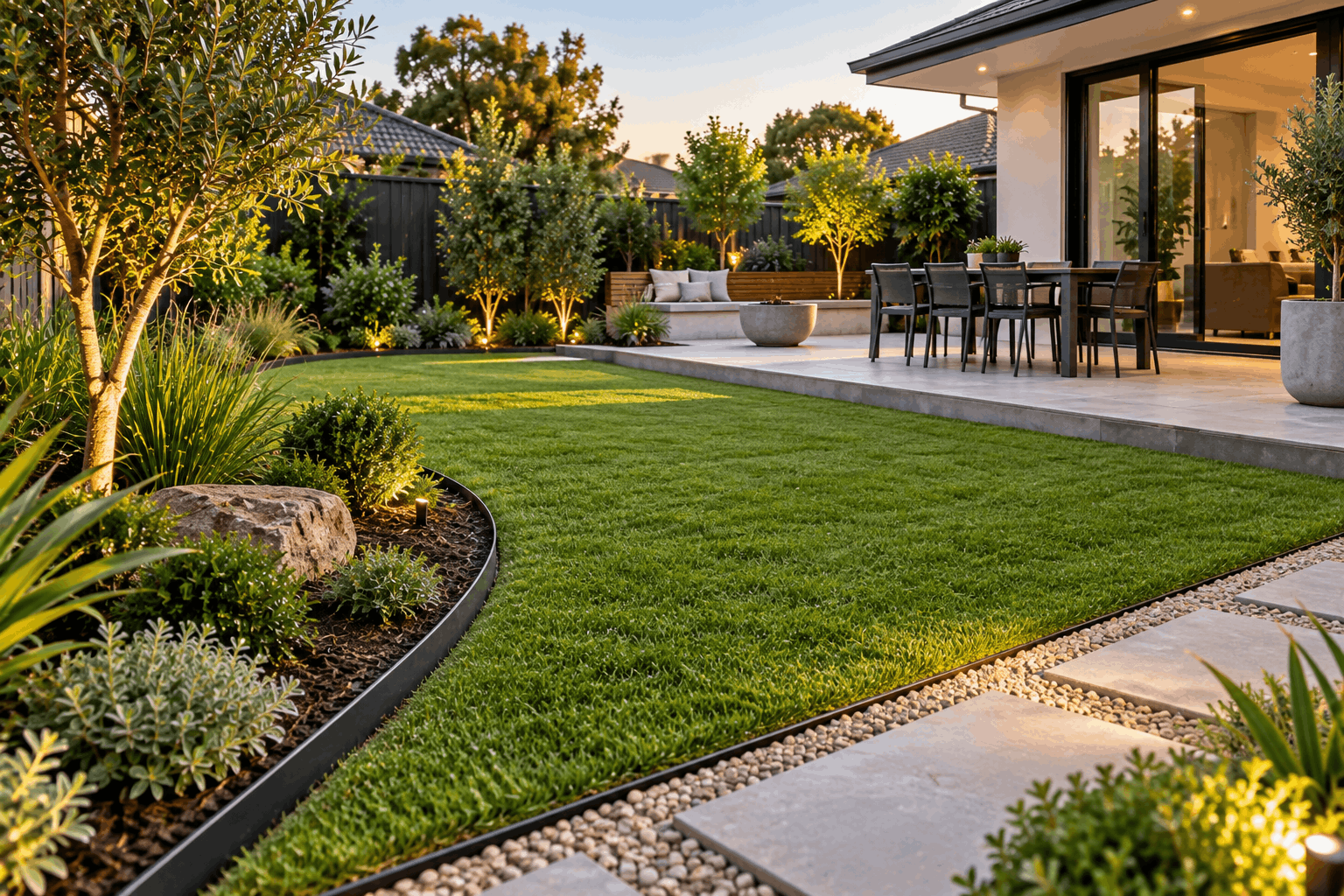
Edging should relate to the materials already used around the property. The strongest results usually come from repeating an existing finish rather than adding another unrelated material.
For example:
- Exposed brick homes can work well with brick or warm-toned edging.
- Contemporary homes can suit slim metal profiles.
- Natural gardens can use timber or a restrained soil edge.
- Formal gardens can benefit from straight masonry or concrete borders.
- Curved planting beds generally suit flexible metal edging.
The width and height matter too. A heavy border can dominate a small courtyard, while an extremely thin edge may look lost beside substantial paving or retaining work.
Local public-domain specifications also show that edging can serve a practical relationship with paving and drainage, rather than functioning purely as decoration.
What often gets missed during planning is the relationship between the edge and the mower. If the finished edge sits flush with an adjacent lawn or mowing strip, maintenance can become much easier.
3. What Ground Conditions Should You Check Before Installing Edging?
Ground conditions should influence the edging system before you choose the finish. Loose soil, sloping ground, existing paving, drainage paths and underground services can all affect installation.
A professional site assessment should consider:
Soil and levels
Check whether the soil is firm enough to hold stakes or whether excavation and a more stable base are required.
Drainage
Avoid creating a low point where water can sit against the edging. The border should work with the existing fall of the garden.
Existing surfaces
Paths, paving and turf may need different finished levels. Getting these levels wrong can create awkward mowing strips or water flow problems.
Underground services
Before excavation, underground services need to be identified. Melbourne council technical documentation specifically refers contractors to Dial Before You Dig for excavation work.
This is one area where watering systems for gardens should be considered at the same planning stage. Irrigation lines can cross garden borders, so deciding the edge first and dealing with irrigation afterwards can create unnecessary rework.
4. Should You Choose Edging for Appearance or Maintenance?
Maintenance should have a major influence on the decision. An attractive edge that creates extra trimming or frequent repairs may become frustrating over time.
For low-maintenance lawns, consider a border that allows the mower to approach the edge cleanly. Brick, paver or concrete mowing strips can be useful where the garden design allows them.
For curved beds, flexible metal can reduce the need for multiple joints and can maintain a consistent line when correctly installed. Australian suppliers offer metal edging systems designed for straight lines, curves and circular forms.
Timber and sleeper edging can provide a substantial border and can work particularly well when a raised garden bed is part of the design. However, the material should be selected with soil contact and expected service life in mind.
If the garden includes raised planter boxes, match the edging with their height, finish and surrounding paving. This creates a more consistent visual connection between separate garden elements.
Practical takeaway: Think about who will maintain the garden. A family lawn, rental property, low-maintenance courtyard and established native garden can all require different edging decisions.
5. How Does Installation Affect the Performance of Garden Edging?
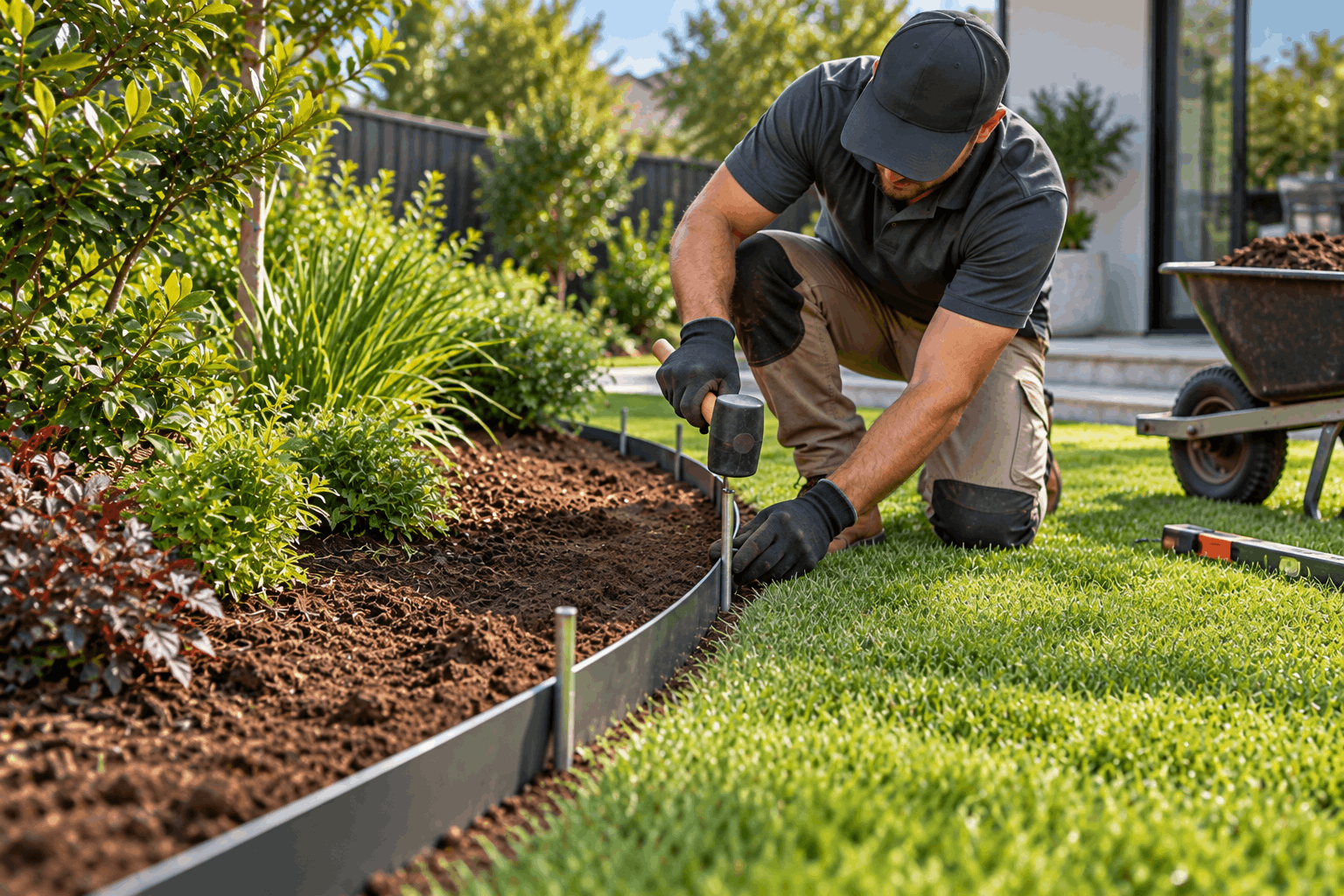
Installation quality can matter as much as the material itself. An expensive edging product can still move, lift or lose its line if it is poorly supported.
The basic process should account for:
- Setting out the intended line.
- Excavating to the required depth.
- Preparing an appropriate base where needed.
- Positioning and securing the edging.
- Checking finished levels against lawn, paths and garden beds.
- Completing soil, mulch, turf and irrigation around the finished border.
Melbourne examples of technical edging details specify fixing methods, stake spacing and finished relationships with adjacent surfaces. These details demonstrate why installation should be treated as part of the specification rather than an afterthought.
Another commonly overlooked issue is future garden growth. Leave sufficient room around plants so mature roots and stems do not immediately crowd the border. Likewise, avoid placing edging where future maintenance access becomes difficult.
For larger projects, edging should be planned alongside broader landscaping services, particularly where excavation, irrigation, retaining structures, paving or turf installation are involved. Bayside Landscaping’s builder-focused material also highlights the importance of coordinating different trades and underground services before hard construction work begins.
Garden Edging Material: A Quick Overview
|
If your priority is… |
Consider… |
Why |
|
Crisp modern lines |
Steel or aluminium |
Slim profile and flexible layouts |
|
Warm natural appearance |
Timber |
Works well with softer planting |
|
Easy mowing |
Flush paver, brick or concrete strip |
Creates a firm mowing boundary |
|
Curved garden beds |
Flexible metal |
Easier to form continuous curves |
|
Raised planting |
Timber sleepers or suitable structural edging |
Provides a more substantial border |
|
Informal native garden |
Spade-cut edge or timber |
Keeps the finish understated |
The material should still be assessed against the actual site. A product suitable for a level garden bed may need a different installation approach on a slope or beside a paved area.
Build Better Garden Borders From The Start
Conclusion
Good garden edging projects in Melbourne start with the site rather than the product catalogue. Consider the garden’s style, ground conditions, drainage, mowing requirements, irrigation and future maintenance before selecting a material.
Bayside Landscaping brings more than 10 years of experience to residential and commercial projects across Melbourne, with qualified professionals involved from planning and design consultation through to construction. If you are planning a new garden, turf area or outdoor renovation, call us today to discuss the right edging approach for your property.
FAQs
Is steel edging suitable for Melbourne gardens?
Yes, steel edging can suit Melbourne gardens where a crisp, slim border is wanted. The appropriate profile, finish, fixing method and height depend on the application. Weathering, galvanised and coated options are available, with each producing a different appearance and performance profile.
Can garden edging help with irrigation planning?
Yes. Edging and irrigation should be coordinated before installation. Irrigation pipes crossing a new border may need careful positioning to avoid damage during excavation or later maintenance. Planning both systems together can reduce unnecessary disturbance to established garden beds.
Does garden edging replace a retaining wall?
No. Standard garden edging generally defines or separates areas. A retaining wall performs a structural function by holding back soil. If a garden has a meaningful change in ground level, the project should be assessed for an appropriate retaining solution rather than relying on decorative edging.
Should edging be installed before turf?
Usually, the finished levels and edging position should be established before final turf installation. This gives the turf a defined boundary and helps avoid cutting or reshaping newly installed grass. The exact sequence can change where paving, irrigation, drainage or construction work is also involved.