
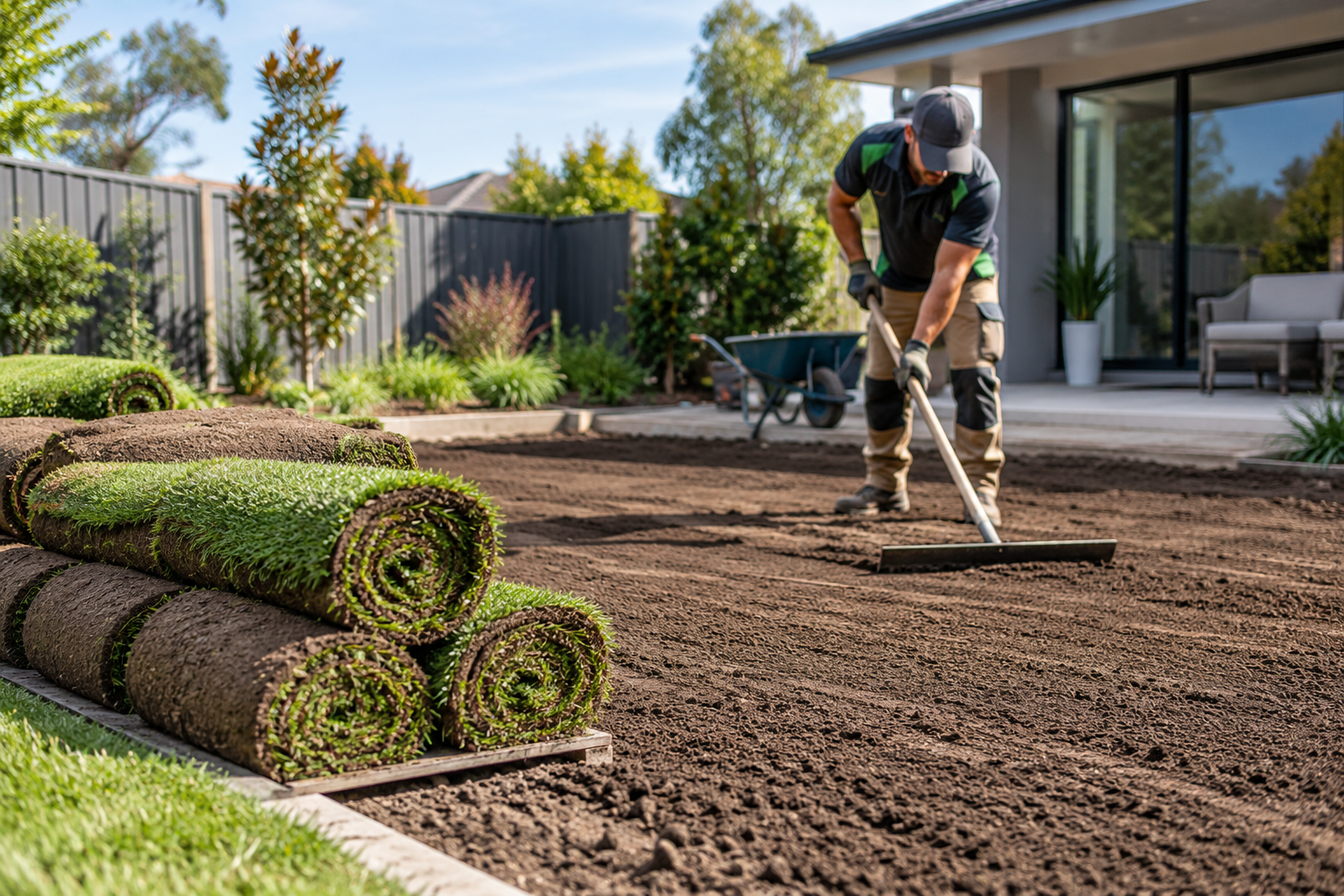
A new lawn can transform an outdoor area, but getting turf established is not as simple as rolling it out and turning on the hose. Melbourne’s soil, seasonal conditions, shade and water requirements can all affect the result.
- The wrong variety of turf may be unsuccessful in shade.
- Too much water can create problems rather than solving them.
- Poor soil preparation will spoil good quality turf.
- Newly planted turf will need some time to grow strong roots.
Bayside Landscaping has over 10 years of experience to provide professional residential and commercial outdoor services throughout Melbourne. In this guide we discuss common turf myths from practical considerations to help you plan turf installation in Melbourne better.
Topic: Common myths about turf laying in Melbourne, such as soil preparation, grass type, watering, time and establishment.
Key Considerations: Turf should be appropriate for the site conditions. Soil, drainage and irrigation should be addressed before laying turf.
Professional Insight: Bayside Landscaping will assess the condition of the site before recommending turf and related works.
Practical Approach: Turf laying should be planned according to soil preparation, sunlight, seasonal growth and watering requirements.
Outcome: Better establishment, fewer installation problems that could have been avoided.
Top Myths Around Turf Installation
Myth 1: Any Turf Will Grow on Any Melbourne Property
No. Choose the right turf for the sun, soil, how you plan to use it and how much water you have. Different kinds of grass have different tolerances and different needs, so choosing turf based only on how it looks can lead to problems later on.
For instance, a space that receives little sun might have a different turf selection than an open backyard that gets lots of direct sun.
Before you decide, evaluate:
| Site Condition | Key Consideration |
|---|---|
| Full sun | Select a variety suited to strong sun and intended use. |
| Partial shade | Check the shade tolerance of the turf before installing. |
| Heavy foot traffic | Consider durability and recovery needs. |
| Limited watering | Consider irrigation access and ongoing maintenance requirements. |
| Sloping ground | Think about drainage, soil stability, and water movement. |
Myth 2: Good Turf Can Fix Poor Soil
False. Turf cannot compensate for a poorly prepared growing base. Compacted soil can restrict root development, while unsuitable levels or drainage can leave water sitting around the roots.
This is particularly relevant around newer homes and construction sites, where repeated machinery and trade activity can compact the ground.
What most experts miss is the soil transition beneath the new lawn. Adding a layer of quality soil does not automatically solve compaction underneath it. If the underlying ground remains dense, developing roots can eventually encounter that barrier.
Good preparation may involve:
- Removing unsuitable material and construction debris.
- Correcting levels before turf arrives.
- Breaking up compacted areas.
- Preparing an appropriate growing layer.
- Checking drainage before final installation.
This becomes even more important when turf forms part of landscaping for builders, where site access, construction sequencing and finished levels need to work together.
Plan Your New Lawn With Confidence
Myth 3: More Water Means Faster Turf Establishment
False. Fresh turf needs consistent moisture, not excessive watering. The objective is to keep the root zone suitably moist while avoiding conditions that leave the soil persistently saturated.
Water requirements can change according to:
- Temperature.
- Rainfall.
- Soil type.
- Turf variety.
- Sun exposure.
- Establishment stage.
Melbourne homeowners should also check current Victorian water requirements before setting irrigation schedules. A watering routine that worked during one season may be unsuitable during another.
If automated irrigation is being installed, watering systems for gardens should be planned around the lawn’s actual coverage requirements rather than simply using a timer on every zone.
The practical lesson: water according to soil and weather conditions, not according to a fixed number of minutes.
Myth 4: Turf Can Sit For Days Before It Is Laid
False. Fresh turf should be installed promptly after delivery. Turf remains living material after harvesting, so leaving rolls stacked for an extended period can expose them to heat, moisture and deterioration.
Preparation should therefore happen before the delivery arrives.
A sensible sequence is:
- Finish ground preparation.
- Lay the turf promptly.
- Water according to site conditions.
- Monitor establishment.
- Confirm access to the installation area.
- Arrange delivery for the planned installation period.
This also applies to larger grass laying projects, where delivery logistics become more important because greater quantities need to be placed efficiently.
One practical point often overlooked is access. If machinery, materials or trades still need to cross the area, turf delivery may be premature even when the soil is ready.
Myth 5: Fresh Turf Is Ready To Walk On
False. A green lawn does not mean the turf has fully rooted into the soil. Fresh turf can look complete shortly after installation while its root system is still developing.
Avoid unnecessary traffic during the early establishment period. The exact timing varies according to turf variety, weather, soil condition and how quickly the roots connect with the prepared base.
What most experts miss is the effect of traffic on moist soil beneath newly laid turf. Walking repeatedly across soft ground can create depressions and compact the root zone, potentially leaving an uneven surface.
For larger projects, establish temporary access routes before the turf arrives. This is especially useful when other trades remain active around the property.
Myth 6: Winter Is Always The Wrong Time For Turf
False. Installation timing depends on the turf variety, site conditions and the result the homeowner expects. Warm season grasses can grow more slowly during Melbourne’s cooler months, so establishment may take longer.
That does not automatically make every cooler-season installation unsuitable. It means the project needs realistic expectations.
| Factor | Why It Matters |
|---|---|
| Temperature | Influences root and shoot growth. |
| Sunlight | Affects photosynthesis and growth rate. |
| Rainfall | Changes irrigation requirements. |
| Soil Moisture | Influences establishment and site access. |
| Turf Variety | Determines seasonal growth behaviour. |
| Project Timing | May affect when the lawn becomes fully established. |
If appearance and establishment speed are important, discuss the expected seasonal performance before selecting an installation date.
Myth 7: Synthetic Turf Is Installed Like Natural Turf
False. Synthetic grass installation requires a different preparation method because the surface does not establish roots. Instead, its performance depends heavily on the stability, levels and drainage of the constructed base.
Natural turf relies on contact between its roots and the prepared soil. Synthetic turf relies on a properly prepared supporting surface.
When comparing the two options, consider:
- Expected foot traffic.
- Drainage requirements.
- Sun exposure and surface heat.
- Maintenance preferences.
- Appearance.
- Long-term use of the area.
The key point is that synthetic turf is not simply natural turf without watering. Its installation has different construction requirements.
What Actually Causes Most Turf Problems?
Most turf problems begin before the turf is laid. The common causes are usually linked to a mismatch between the grass variety, site conditions, preparation and establishment plan.
Before installation, check five areas:
- Soil: Is the ground compacted, uneven or poorly draining?
- Sunlight: How much direct sunlight reaches the proposed lawn?
- Water: Can the area receive suitable irrigation?
- Access: Will residents, builders or trades need to cross the new lawn?
- Timing: Does the chosen turf suit the current season?
Bayside Landscaping’s experience across excavation, irrigation, turf work and construction-related projects supports a more connected approach to preparation. The lawn should work with the surrounding works rather than being treated as the final task added at the end.
Build A Better Lawn From The Ground Up
How Can You Avoid Turf Installation Mistakes?
The best prevention is to assess the site before choosing the turf or booking installation. A professional assessment should consider more than the visible condition of the existing lawn or soil.
Ask the installer:
| Question | Why Ask It? |
|---|---|
| Which turf suits my sunlight levels? | Prevents unsuitable grass selection. |
| What preparation will the soil receive? | Shows whether the growing base is being properly addressed. |
| How will drainage be managed? | Helps prevent persistent wet areas. |
| What irrigation is required? | Supports appropriate establishment. |
| When can normal use resume? | Sets realistic expectations after installation. |
| What happens if site conditions change? | Clarifies how unexpected ground or weather issues will be handled. |
A detailed answer to these questions is more useful than comparing quotes on price per square metre alone.
Conclusion
Successful turf installation depends on decisions made before the first roll reaches the ground. Turf variety, soil preparation, drainage, sunlight, irrigation and installation timing all influence how well a new lawn establishes.
Bayside Landscaping supports residential and commercial projects, from site preparation and irrigation through to turf setup and broader outdoor construction. If you are planning a new lawn and want advice based on your property’s actual conditions, get in touch with us.
FAQs
How do I know if my existing soil needs improvement?
Look for persistent waterlogging, very hard or compacted ground, poor drainage, uneven levels or areas where previous grass struggled despite reasonable care. A site assessment can determine whether soil preparation, grading or other groundwork should happen before the turf is installed.
Can I install turf around existing garden beds?
Yes, but the finished levels should be planned carefully before installation. Turf should meet garden edging cleanly without creating areas where soil or mulch spills onto the lawn. Drainage and mowing access should also be considered when setting the final levels.
What happens if rain delays turf installation?
The response depends on the site and the amount of rainfall. Turf should not be laid onto unsuitable saturated ground simply to meet a schedule. It may be better to delay installation until the soil can be prepared and worked without creating compaction or drainage problems.
Should I choose natural turf for a frequently used backyard?
Natural turf can suit active backyards, but the variety should match the expected use, sunlight and maintenance routine. Consider how often the area will receive foot traffic, whether children or pets will use it, and whether the site can receive appropriate watering during establishment.