
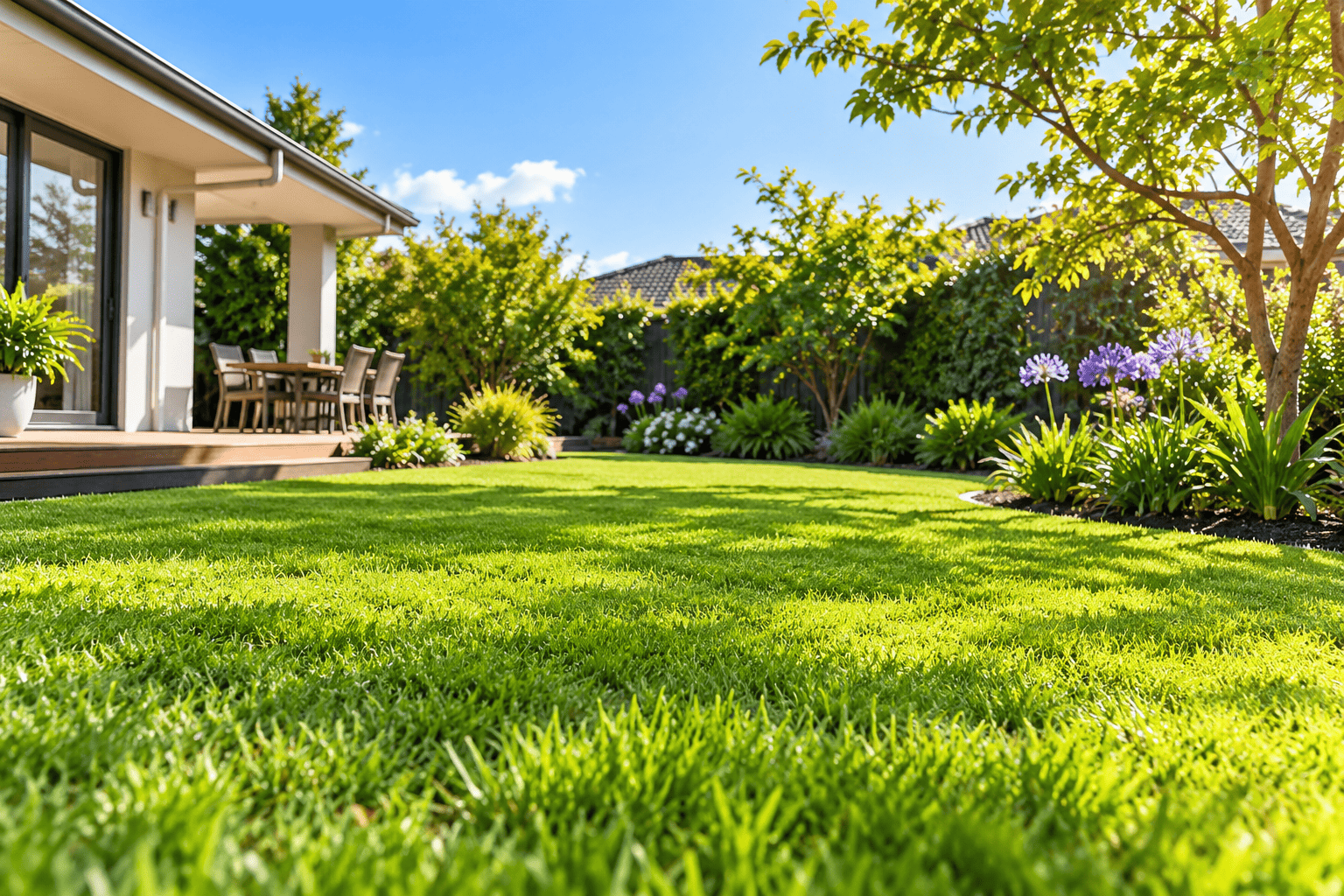
Spring growth shows every problem a lawn carried through winter. Compacted soil, thick thatch and a late start on heat prep can leave grass thin before summer.
- Water runs off hard soil instead of reaching the roots.
- Thick thatch blocks moisture, air and fertiliser.
- Patchy grass lets weeds move in quickly.
- Early heat can scorch lawns that start summer weak.
Bayside Landscaping is a family-run business with over 10 years of experience, delivering landscaping services in Melbourne that include irrigation, landscape construction and turf work. In this blog, we will understand how to aerate, dethatch and prepare a lawn for early summer heat.
Focus: Preparing Melbourne lawns for spring growth and heat.
Key Considerations: Soil compaction, thatch, watering and recovery.
Care Approach: Aerate and dethatch first, then adjust watering, with turf laying for failed patches.
Professional Insight: Bayside Landscaping suggests testing soil before choosing lawn care across Melbourne treatments.
Outcome: Stronger roots and a lawn ready for summer.
When Should You Aerate and Dethatch Your Lawn?
Aerate and dethatch in early to mid spring, once grass is actively growing and the soil is moist but not soggy. Warm season grasses such as couch and kikuyu recover best as temperatures lift. Working on dry, stressed grass slows healing.
Spotting Soil Compaction
Lawn aeration removes small cores of soil so air, water and nutrients can reach the roots. Push a screwdriver into the lawn a day after rain. If it resists within a few centimetres, the soil is likely compacted. Clay heavy soils and high traffic areas compact first.
Checking Thatch Build-Up
Thatch is the layer of dead stems and roots between the green grass and the soil. Cut a small wedge from the lawn and measure it. A layer thicker than about 1 cm, or a spongy feel underfoot, suggests thatch build-up that needs removing.
|
Task |
What to look for |
Spring timing |
|
Aeration |
Hard soil, puddling, thin grass |
Early to mid spring, soil moist |
|
Dethatching |
Spongy feel, thatch over 1 cm |
Once growth starts, never in a dry spell |
Supporting Lawn Recovery
Lawn recovery depends on what happens after the work. Water lightly, mow at a higher setting and apply a slow release fertiliser. Keep heavy foot traffic off the lawn for a couple of weeks.
Get Your Lawn Spring Ready
How Can You Prepare Your Lawn for Melbourne’s Early Summer Heat?
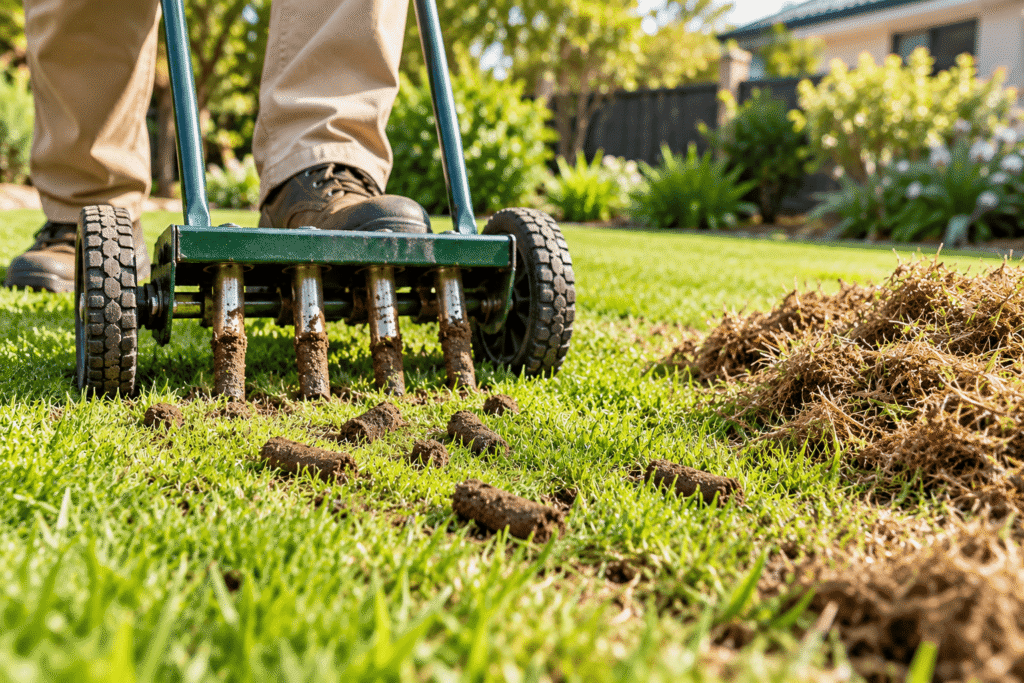
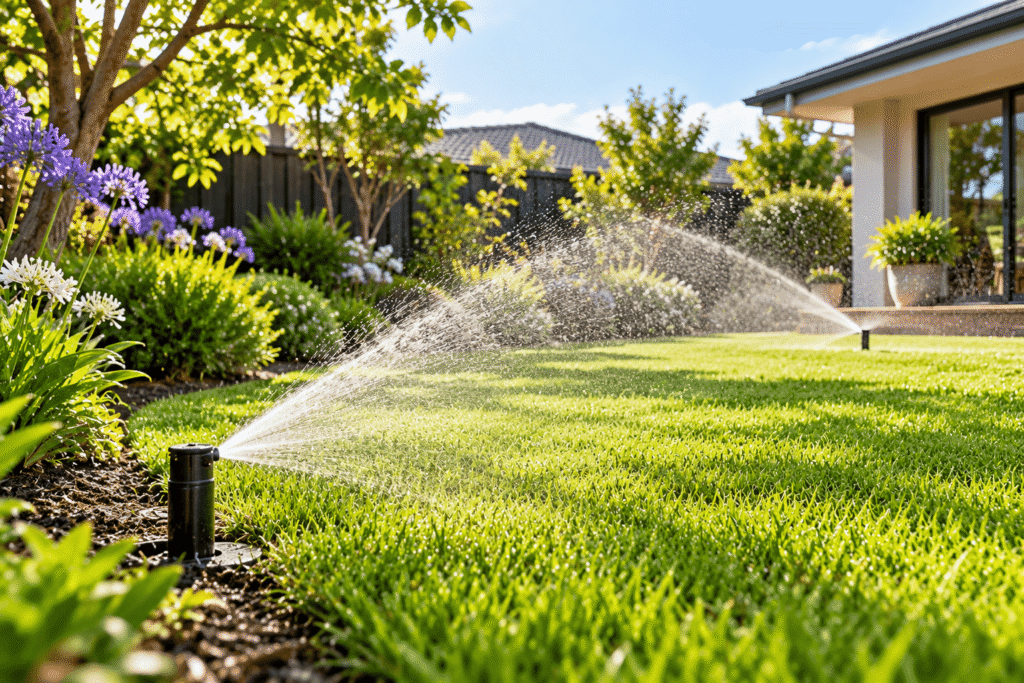
Build deep roots before the heat arrives. Raise the mowing height, water deeply and less often, and check your irrigation while the weather is still mild. Shallow, daily watering keeps roots near the surface, where they dry out first.
- Mowing height: Leave grass longer, since taller blades shade the soil and slow evaporation.
- Watering time: Water early in the morning, when wind and heat are lowest.
- Soil moisture: Sandy soils can repel water, so check that it soaks in rather than pooling or running off.
- Irrigation test: Run irrigation systems for gardens zone by zone, then look for blocked heads, leaks and spray landing on paths.
Spring is the easiest time to fix an irrigation fault. Repairs made now are far less stressful than repairs made during a heatwave.
Which Watering and Turf Care Tasks Should You Prioritise?
Start with watering, because it affects every other task. Then fix irrigation faults, repair bare patches and keep a simple seasonal routine.
- Adjust the schedule: Increase watering gradually as temperatures rise.
- Automate where possible: An automatic watering system prevents missed cycles when life gets busy, provided the controller is reset each season.
- Separate the zones: Well planned watering systems for gardens treat lawn and garden beds separately, since each needs a different amount of water.
- Repair or replace: Overseed small bare patches. Where large areas are bare or weed dominated, turf laying is often more reliable than repeated patching.
When Should You Consider Professional Lawn Care Services?
Consider professional help when the problem is bigger than a weekend job. Levelling, drainage faults and large compacted areas usually need machinery and site preparation.
|
Situation |
Why help is useful |
|
Water pooling after rain |
Drainage or levelling may need correcting. |
|
Large bare or weedy areas |
Soil preparation comes before new turf. |
|
Irrigation faults |
Zones and pipework need testing and repair. |
|
Sloping or uneven ground |
Excavation and grading may be required. |
Homeowners planning wider residential landscaping in Melbourne, such as new garden beds or a rebuilt lawn, can combine these jobs in one plan. Bayside Landscaping offers excavation, irrigation and watering systems, landscape construction and turf laying across Melbourne.
Upgrade Your Garden Watering Setup
Conclusion
A strong summer lawn starts with spring preparation. Aerating, dethatching and early watering adjustments give grass the best chance to cope with the heat ahead. Bayside Landscaping brings over 10 years of family-run experience to every job, working as professional landscapers in Melbourne for both residential and commercial clients. If your lawn needs more than a weekend of effort, send us your address and a few photos, and we will suggest a practical next step. Get in touch to start planning.
FAQs
How long after dethatching should I mow?
Wait until the lawn shows fresh growth, usually a week or two. Mow on a higher setting and remove clippings if the lawn looks cluttered. Mowing too soon or too short can stress grass that is still recovering from the work.
Should I fertilise before or after aerating?
Fertilise after aerating. The holes let nutrients move down toward the roots instead of sitting on the surface. Choose a slow release product, then water it in lightly so it settles into the soil.
Should I skip watering after spring rain?
Yes, if the soil is still damp. Push a finger into the soil. If it feels moist about 5 cm down, hold off. Watering on top of recent rain wastes water and can encourage shallow roots and lawn disease.
How do I know if my lawn needs replacing rather than repairing?
Replace the lawn if weeds cover most of it or large patches stay bare after overseeding. Repair suits lawns that are mostly healthy, with isolated thin spots. A professional can inspect the soil and recommend which option makes sense.