
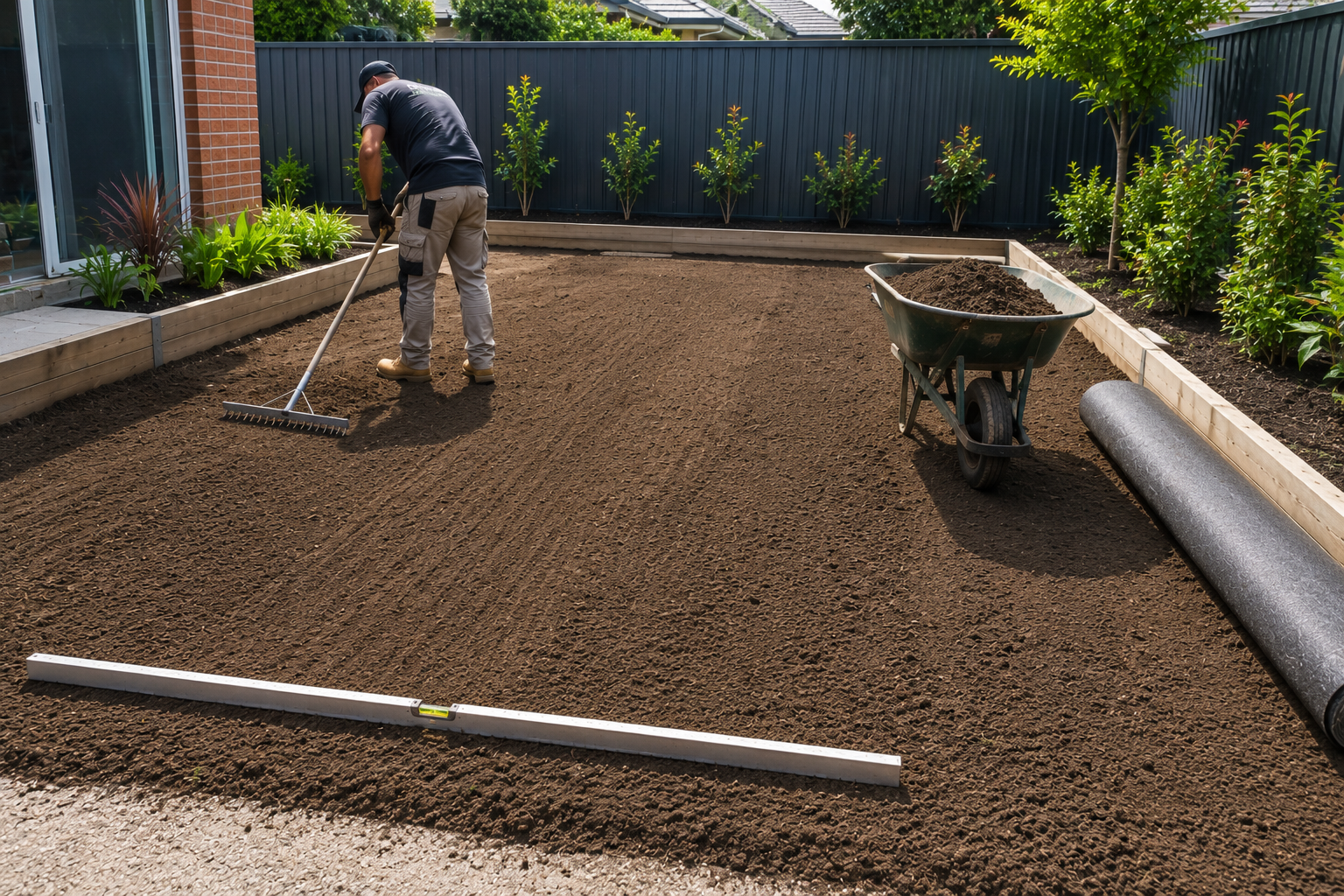
A new lawn can transform a tired backyard, but the turf itself is only one part of the job. If the ground underneath has poor levels, compacted soil or drainage issues, those problems carry through after installation and affect the finished result regardless of the quality of the grass.
Ground preparation is where a successful lawn is built or where future problems are embedded. Unsuitable existing material needs to come out, finished levels need to be established, appropriate soil or base material needs to go in, drainage needs a clear path, and the surface needs to be firm and even before installation begins.
Bayside Landscaping is a family-run business with more than 10 years of experience across residential and commercial outdoor projects in Melbourne. The team works across excavation in Melbourne, irrigation, turf installation and outdoor construction, approaching each site as its own set of conditions rather than a standard preparation sequence.
Focus: Getting the ground right before turf goes down, covering excavation, soil preparation, drainage, and finished levels.
Key Considerations: Current soil condition, how deep excavation needs to go, compaction, drainage paths, irrigation placement, and the height the finished lawn needs to reach.
Preparation Approach: Bayside Landscaping reads the site, completes whatever excavation the ground requires, and prepares soil or base material to suit the turf system being installed.
Professional Insight: Correct preparation produces a stable, evenly graded surface and prevents the drainage failures, level inconsistencies, and ground problems that show up after the turf is laid.
Outcome: A base that is structurally ready for natural turf or synthetic grass installation in Melbourne before the first roll arrives.
The Full Preparation Sequence Before Turf Arrives
The yard should be cleared, assessed, excavated where required and graded before the turf is delivered. The exact preparation depends on existing soil conditions, drainage, access, finished levels and the type of turf being installed.
Work through the site in this order:
- Remove old grass, weeds, roots and debris.
- Inspect the exposed ground.
- Establish the required finished level.
- Complete drainage and irrigation work.
- Add suitable soil or base material.
- Grade the surface.
- Lay the turf once preparation is complete.
Start With the Existing Ground
Old lawn conceals problems. Compacted construction soil, buried rubble, root systems, and uneven ground all sit beneath a surface that appears uniform until it is stripped back. Those conditions need to be identified before any decision is made about how much material requires removal.
Site access determines the excavation method. Wide access allows machinery to extract and remove spoil without complication. A narrow side passage or restricted rear yard requires a different approach, and assuming otherwise creates delays once work begins.
Excavation depth should be calculated backward from the finished lawn level. That finished level has to sit correctly against:
- Paths and paving.
- Driveways.
- Garden edging.
- Retaining walls.
- Drainage points.
- Building thresholds.
Getting this relationship right prevents the new lawn from sitting awkwardly above or below surrounding surfaces.
Prepare Your Yard For Quality Turf Laying
Calculating Excavation Depth for Turf Installation
No single excavation depth applies across every turf project. Existing ground conditions, soil quality, drainage requirements, finished level targets, and the turf system being installed each affect how deep the work needs to go. The most reliable planning approach works backwards from the finished lawn height.
| Stage | What to consider |
|---|---|
| Existing ground | Remove old turf, debris and unsuitable material. |
| Subgrade | Check levels, stability and compaction. |
| Soil or base | Allow the required depth for the selected turf. |
| Finished lawn | Match adjoining surfaces and drainage requirements. |
Too little excavation leaves insufficient room for the required soil or base. Too much increases spoil removal and imported material costs without a corresponding benefit.
The relationship with paving deserves particular attention. A lawn finishing too high creates an awkward edge, while excessive excavation adds unnecessary work to reach the correct level.
Soil Preparation for New Turf
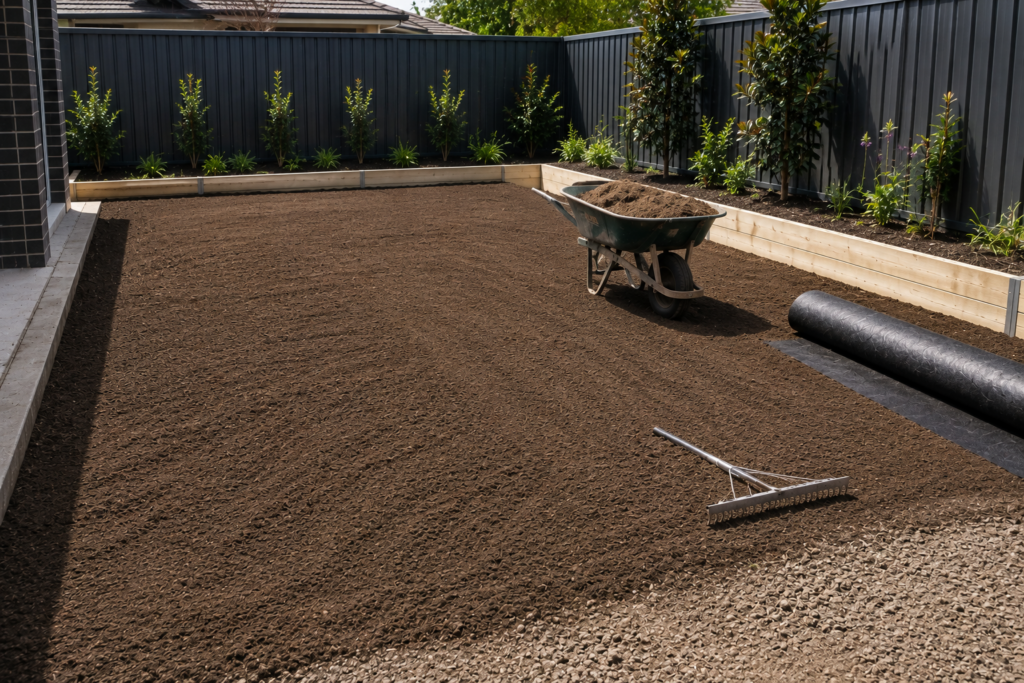
Soil placed on top of a problem does not eliminate it. Compaction, poor drainage, and unstable ground persist beneath new material and affect root establishment once the turf is down.
Before any new material is placed, the exposed ground needs to be checked for:
- Compacted areas that block root penetration.
- Clay layers that hold water and restrict drainage.
- Loose or unstable sections that will shift under load.
- Construction rubble or buried waste.
- Uneven areas across the yard.
- Roots that will interfere with grading.
Agriculture Victoria notes that soil structure affects the movement of air and water through soil, which makes the condition of the existing ground directly relevant to drainage and plant establishment after installation.
Achieving Consistent Soil Conditions Across the Site
A yard can appear evenly prepared while having different soil depths across different areas. This often occurs when existing ground levels vary or previous construction has disturbed sections of the yard unevenly.
Checking multiple areas before ordering additional soil helps establish whether the required depth is consistent. This is also the stage where a landscape gardener with site assessment experience adds the most value, identifying variable conditions that would not be visible once new material is placed on top.
The final surface should be free from stones and construction debris that would interfere with installation or create visible irregularities beneath the finished turf.
Drainage, Finished Levels and Why Getting Both Right Matters
Drainage should be addressed before final grading. Water needs a clear path away from the lawn and surrounding structures, and small depressions that hold water will not be visible until rain reveals them.
Existing drainage problems need to be identified before the final surface is completed, not discovered after the turf is laid. The following conditions should all be checked on site:
- Where rainwater currently flows across the yard.
- Whether water moves toward the house or other structures.
- Existing drainage points and their capacity.
- Low areas that collect water after rain.
- Compacted ground that restricts water movement.
- The relationship between the lawn level and adjacent paving.
Agriculture Victoria identifies soil type, permeability, topography and drainage outlets as all relevant to drainage planning. Adding soil should not conceal a drainage issue. If water collects because of poor grading, compaction or inadequate drainage infrastructure, the underlying cause needs to be addressed before the surface is finished.
Garden design and construction decisions made at this stage also influence how the lawn connects with the rest of the outdoor area. Lawn levels that work with garden beds, paths and outdoor structures from the beginning require far less adjustment later.
Installing Irrigation Before the Turf Goes Down
Underground irrigation work should be completed before final grading. Installing pipework after turf is laid means disturbing the finished surface.
The installation follows a logical sequence:
- Plan watering zones and sprinkler positions across the yard.
- Install underground irrigation components.
- Test operation and coverage before closing trenches.
- Complete final soil grading over the irrigation runs.
- Lay the turf once the surface is prepared.
Where irrigation needs to cross several parts of the yard, getting this sequence right the first time avoids reopening ground after the lawn is established. Bayside Landscaping handles both irrigation and turf setup as part of the same project, which keeps these stages coordinated rather than treated as separate contracts.
Natural vs Synthetic Turf: How Preparation Differs
Natural turf needs a suitable growing medium for root development. Artificial grass installation requires a stable constructed base instead. Applying the same preparation method to both systems produces the wrong result for one of them.
| Factor | Natural turf | Synthetic turf |
|---|---|---|
| Main requirement | Suitable growing soil. | Stable constructed base. |
| Preparation | Soil preparation and grading. | Base preparation and grading. |
| Irrigation | Often required. | Considered separately. |
| Drainage | Soil and site drainage. | Base drainage. |
| Finished surface | Fine, even soil. | Firm, accurately graded base. |
Finished levels matter for both systems. The surface needs to transition properly into paving, garden beds and other outdoor areas regardless of which turf type is being installed.
Final Checks Before Turf Delivery
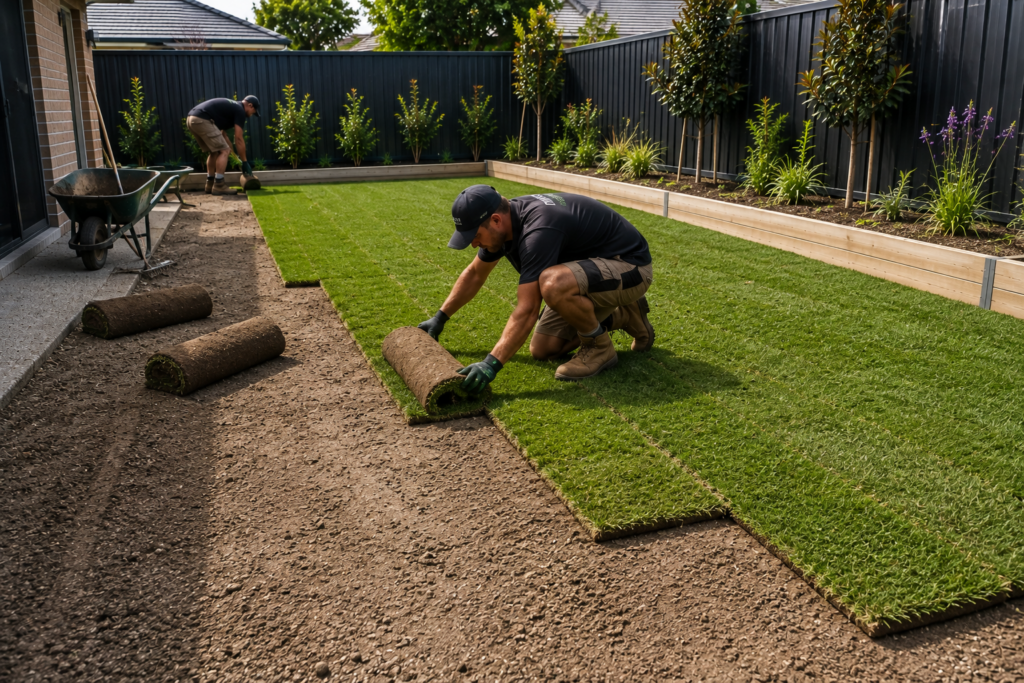
The preparation check should happen before the turf is ordered for delivery. Excavation, drainage, irrigation and soil work should all be complete before the grass arrives.
| Check | Ready when |
|---|---|
| Excavation | Required material has been removed and levels are correct. |
| Soil or base | Suitable material is installed to the required depth. |
| Drainage | Known water issues have been addressed. |
| Irrigation | Underground work is complete and tested. |
| Grading | Surface is smooth and consistent across the yard. |
| Edges | Lawn level works with all adjoining surfaces. |
| Access | Turf can reach the installation area without obstruction. |
| Delivery | Turf arrives close to installation time. |
The final grading stage deserves particular attention. Small ridges remain visible beneath turf, and shallow depressions will collect water. Before installation, walk the surface and check for stones, rubble, exposed irrigation components, unexpected low points and any loose areas that need further compaction.
The surface should be fully ready when the turf arrives. Turf sitting on a delivery pallet while final ground preparation continues creates unnecessary pressure on installation quality.
Plan Your Turf Preparation With Confidence
Conclusion
A successful lawn installation is determined before the turf arrives. Existing ground conditions need to be assessed, unsuitable material removed, finished levels calculated, drainage resolved and the soil or base prepared for the selected turf system.
Bayside Landscaping brings over 10 years of experience across excavation, irrigation, turf laying and residential and commercial outdoor construction in Melbourne. Whether the project involves natural grass or a constructed base, preparation starts with understanding the specific conditions of the site rather than applying a standard process.
FAQs
Can I prepare the yard myself before hiring a turf installer?
Basic clearing is something most homeowners can manage. Everything beyond that depends on the specific site. Excavation depth, finished levels, drainage direction, and soil condition all vary between properties, and getting those wrong affects the turf after it is laid. Sites with meaningful slopes, compacted ground, drainage problems, or structures that influence the finished level benefit from professional assessment before preparation begins.
How soon should turf be laid after soil preparation?
The prepared surface should be ready before the turf arrives so installation can proceed without unnecessary delay. Weather, soil moisture and supplier requirements all influence timing, so preparation and delivery should be coordinated as closely as the site conditions allow.
What happens if the soil is too wet?
Working saturated soil damages its structure and creates additional compaction. If the ground is excessively wet, preparation should wait until conditions improve. Grading wet soil leaves ruts and creates an inconsistent surface that will show through the finished turf.
Does a sloping yard need to be completely level?
No. Turf can be installed on a suitable slope when finished levels are properly planned. The key considerations are stability, drainage and safe transitions between the lawn and surrounding areas. Steeper sites may require additional earthworks or retaining solutions before installation proceeds.